Once or twice a week, at 10 to 1 pm, the conservation team (or those of us who are around at the time) climb the precipitous stairs up to the Sunley Solar. This is the informal meeting space at the top of the farmhouse offices, named after a generous benefactor of the Trust. The ten to ones, as they have come to be known, are a chance to share knowledge and help us keep up to speed with the latest in conservation, or simply to ask if anyone knows the answer to question that has cropped up in our work that day.
Half of the Conservation team gather in the former attic of the 17th century farmhouse that now houses our offices, so that Chloe can update us on the latest in wetland conservation.
For example, last week, Chloe fed back to us about a conference she had just been to, Wetland Futures, which was focused on those areas where the rivers meet the sea. These wetland areas can look desolate, but the marshes, mudflats and saltmarshes that characterise them are some of our most wildlife rich areas. We are looking at what we can do to improve wetland biodiversity, it is an important area of our work at the moment; Chloe brought back lots of information about projects that are happening around the country, and ideas for things that would work in Kent.
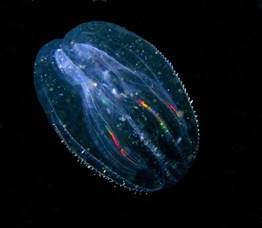
Marine species like the sea walnut can be carried in ballast water and in the absence of local predators, multiply and form extensive populations. The sea walnuts then consume zooplankton, including fish eggs and larvae, reducing the food available to native species, and having a knock-on effect along the food chain and a devastating impact on local fisheries. Image from: http://ocean.si.edu/ocean-photos/sea-walnut-mnemiopsis-leidyi
She also provided an update on the problem of invasive non-native species, which are particularly difficult to deal with in these environments. It is vital to track the spread of invasive species, to understand how they colonise areas and where we should target work. Anyone can help to do this, simply by recording species that they come across and sending this information to the various recording schemes which record the spread of invasive species. There is even an app for that to make it really easy to do -download the That’s Invasive app.
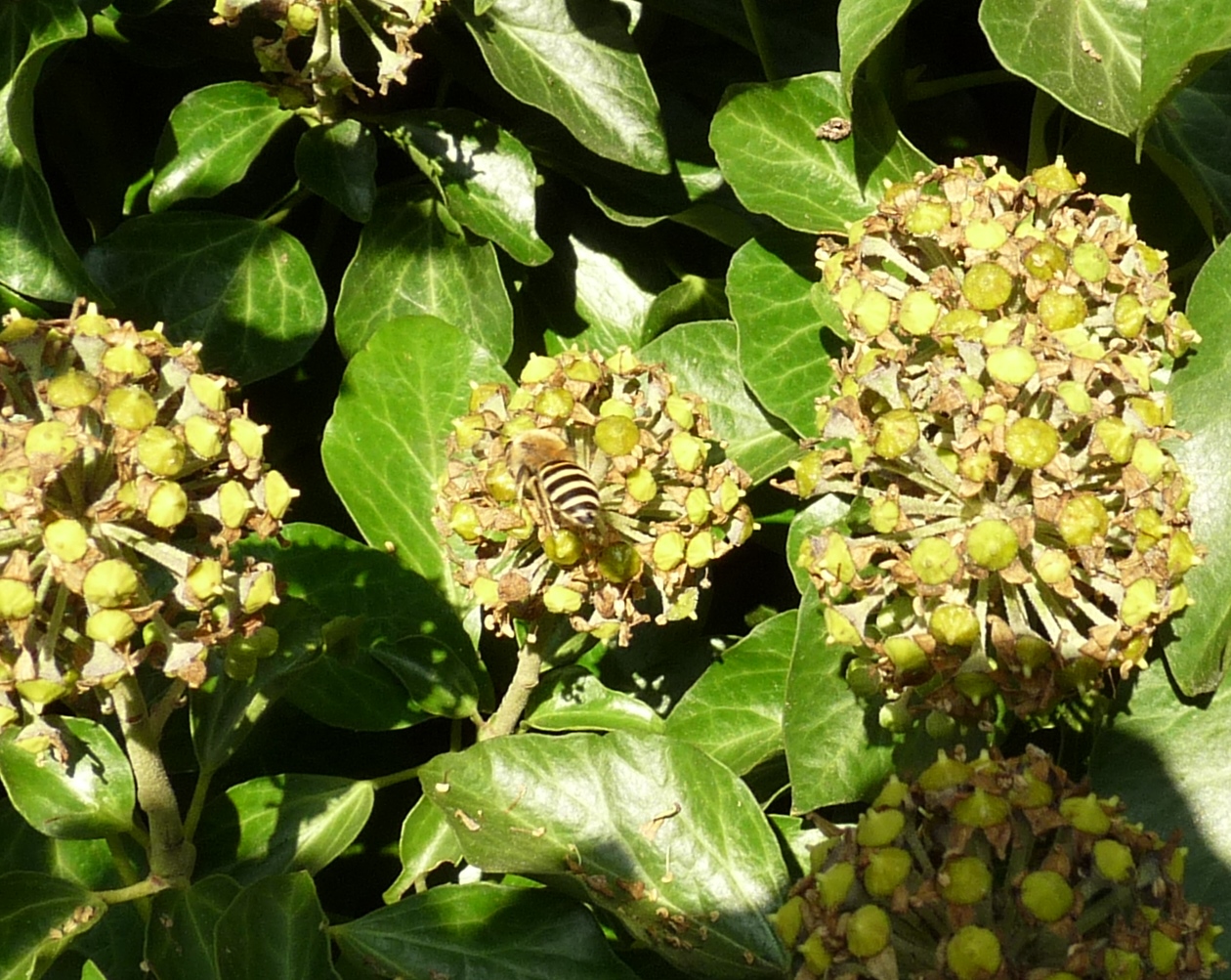
Ivy bees were first found in Britain in 2001. Since then, they have spread throughout the south of England. If you see a very stripy looking bee, with a furry thorax, on ivy in the autumn, it is almost certainly an ivy bee. They are mining bees, which means they create a nest in the ground. Although they are solitary bees, each creating a single nest, you can get large aggregations of bees nesting in one area.
Sometimes, at ten to one, we go for a wander instead. It gets us away from our screens, provides some low level exercise, gives us time to catch up with what other people are up to, and we usually learn something new as well, or at least I do. It’s the good kind of multitasking. Last week, on a lunchtime walk with some of the conservation team, we were practicing wild walks, Greg was spotting spiders, Paul found a badger latrine and I learned about ivy bees.
Autumn has finally arrived, the woods and hedges are starting to blaze with fiery colour and despite the gloriously sunny and warm weekend, it must be time to let go of summer. Time, then, for a round-up of what has been happening at the Trust over the summer months before it becomes ancient history.
In July, I did this! And found that it took a lot more organisation that I suspected, but we did have an amazing day with family and friends.
It has been a remarkably busy summer, with lots of new beginnings; new work to do, new staff and for me, the option of a new surname (although, to keep things simple, I’ll be sticking with the old one). To celebrate, we spent two weeks camping in France, trying (not entirely successfully) to outrun the rain. It was brilliant, even though we slightly blew our camper van up.
Meanwhile, back at work, we have been successful with two of the funding applications we were working on earlier in the year and so two new projects have begun.
The East of Eden project, funded by Biffa Award, started in July. Sam, who has been delivering a very successful project in the Eden Valley, working with landowners to restore habitats along the River Eden, saw an opportunity to use similar techniques in other river valleys, as well as working on new sites in the Eden valley to connect up the sites already restored. He worked with Natasha, one of the Trust’s funding officers, to put together a proposal for funding to do this work.
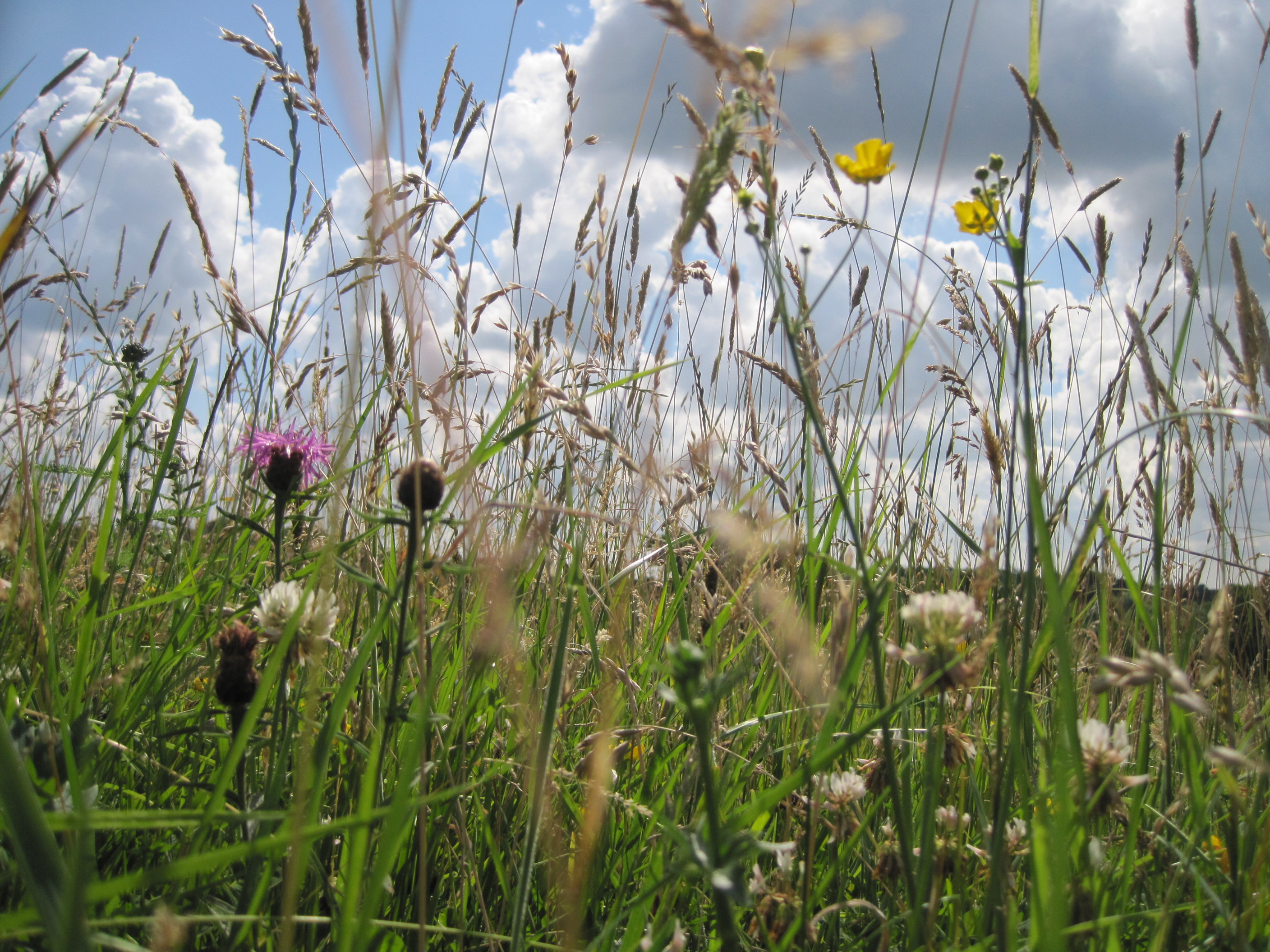
This kind of conservation work is vital – you may have seen reports that very few rivers and water bodies in England are classed as being in good or excellent condition, many suffer from pollution and poor biodiversity. By improving the habitats alongside rivers, we can prevent silt being washed into them and help filter out pollutants as well as increasing wildlife. A particularly important habitat that Sam will be helping landowners to restore is flower-rich meadow – a habitat which has declined by 97%.
Another exciting success story is the granting of funding from the Heritage Lottery Fund to develop a marine project called Guardians of the Deep. This project will enable us to share with people why the Marine Conservation Zones that have been identified around Kent’s coast are so important and in need of protection, and help us to involve people in looking after them. Fiona, our Marine Officer, will now be working full-time, spending 3 days a week building links with community groups, schools and other partner organisations, running pilot projects and getting everything in place to deliver the full, three year project. This work will all come together in the Phase II application that, if all goes to plan, will unlock the funding for the project.
We have a new team member, Vinny, who will be leading the advisory work of the team, improving our ability to give advice on planning issues and to landowners and businesses. Vinny has been running the national Grow Wild project for the Kew Royal Botanic Gardens and before that worked at Groundwork for many years.
Our work to protect the wildlife of the Lodge Hill Site of Special Scientific Interest has intensified since the announcement was made that the application to develop the site would be decided through a Public Inquiry. We have now appointed a barrister to present our case and Greg is putting together the evidence that we will need to demonstrate that this development would have a wholly unacceptable impact on a site that is not only of great wildlife value to Kent but is of national importance because it holds over 1% of the country’s breeding nightingale population.
Our office at Tyland Barn sit at the foot of the North Downs, which would be a picturesque location if it wasn’t for the nearby M20 and the dual carriageway running up Bluebell Hill.On the other hand, it is perfectly placed for a lunch time stroll along one of our most high profile Roadside Nature Reserves.It is spectacular at this time of year; even driving past you can see the pink flower spikes of the orchids.
At the moment you can see the pink spikes of the common spotted orchids as you drive past. Last year, Gill’s volunteers counted 26,000 orchids on the Bluebell Hill Roadside Nature Reserve. As well as common spotted orchids, there are pyramidal orchids, man orchids, bee orchids, common twayblade, broad-leafed helleborine and white helleborine.
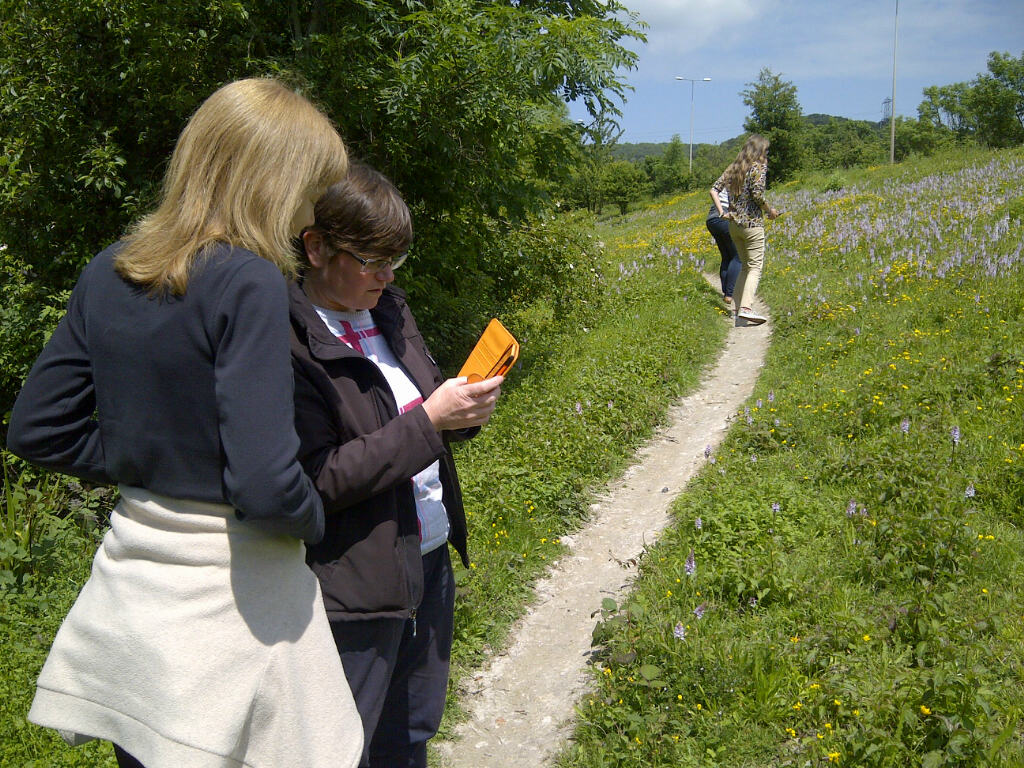
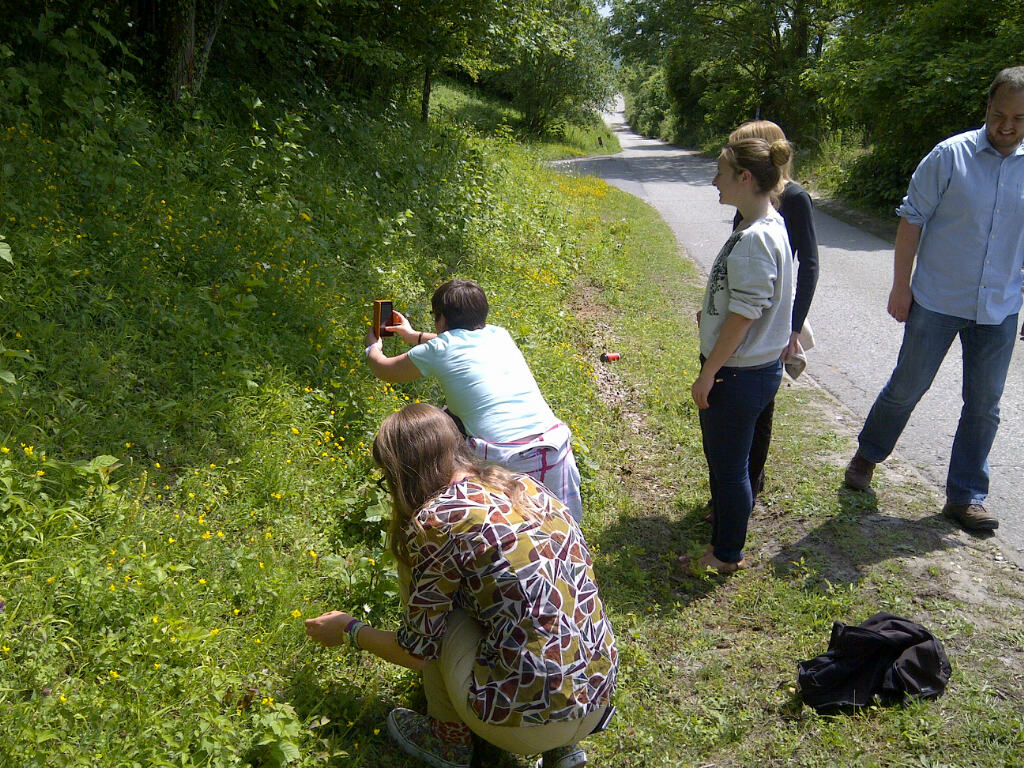
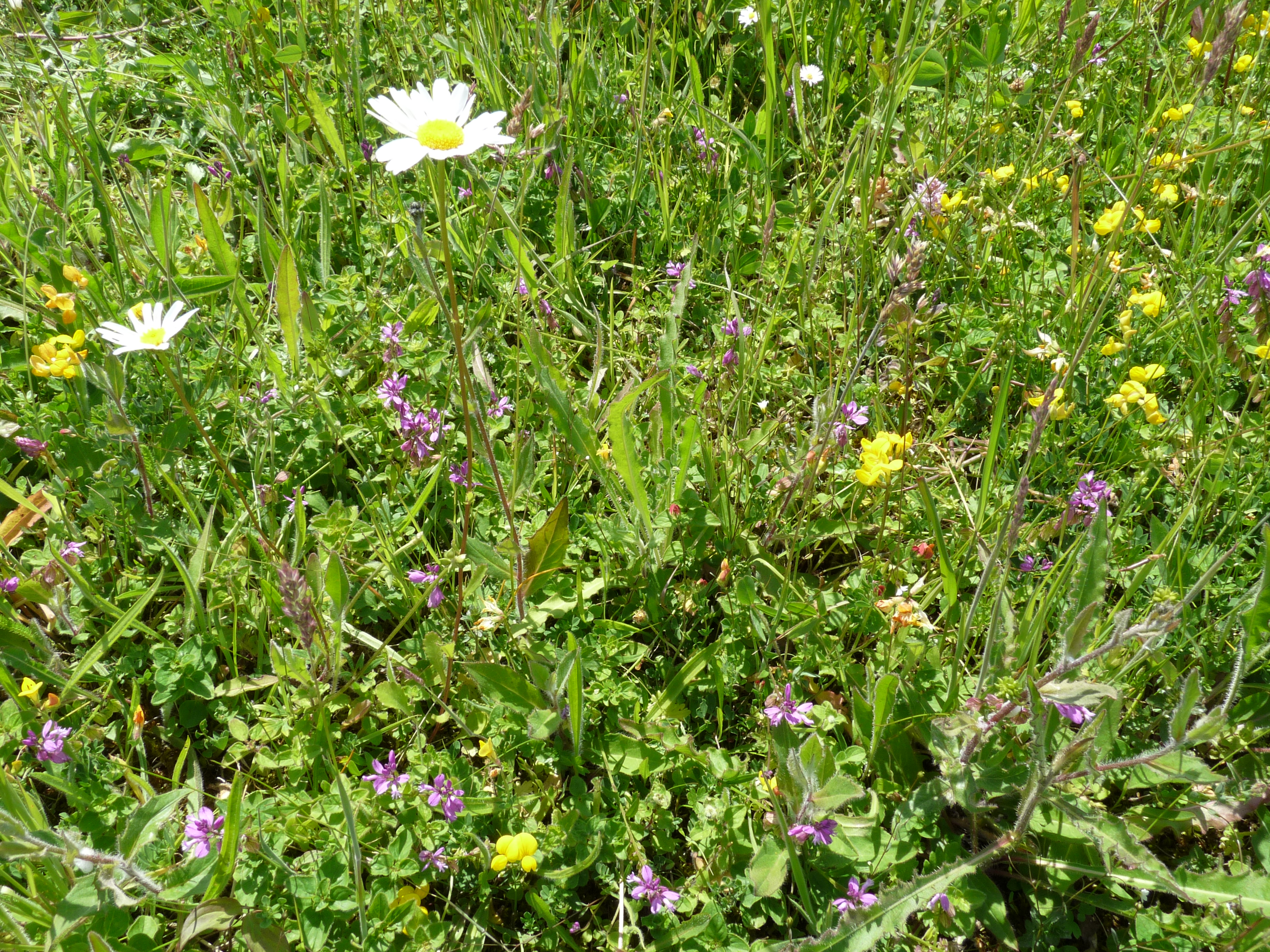
Breaking news… Fiona shows Alison how to tweet an image of an orchid. As you can probably tell by this blog, some of us are arriving fashionably late to the social media revolution.How much ground can a bunch of ecologists cover in a lunchtime? The answer is not much, as we stop to examine something every few yards.Milkwort, oxeye daisy, bird’s-foot-trefoil
Not all chalk grassland flowers are as showy as the orchids, you have to look closely to appreciate the beauty of delicate fairy flax, eyebright and milkwort.
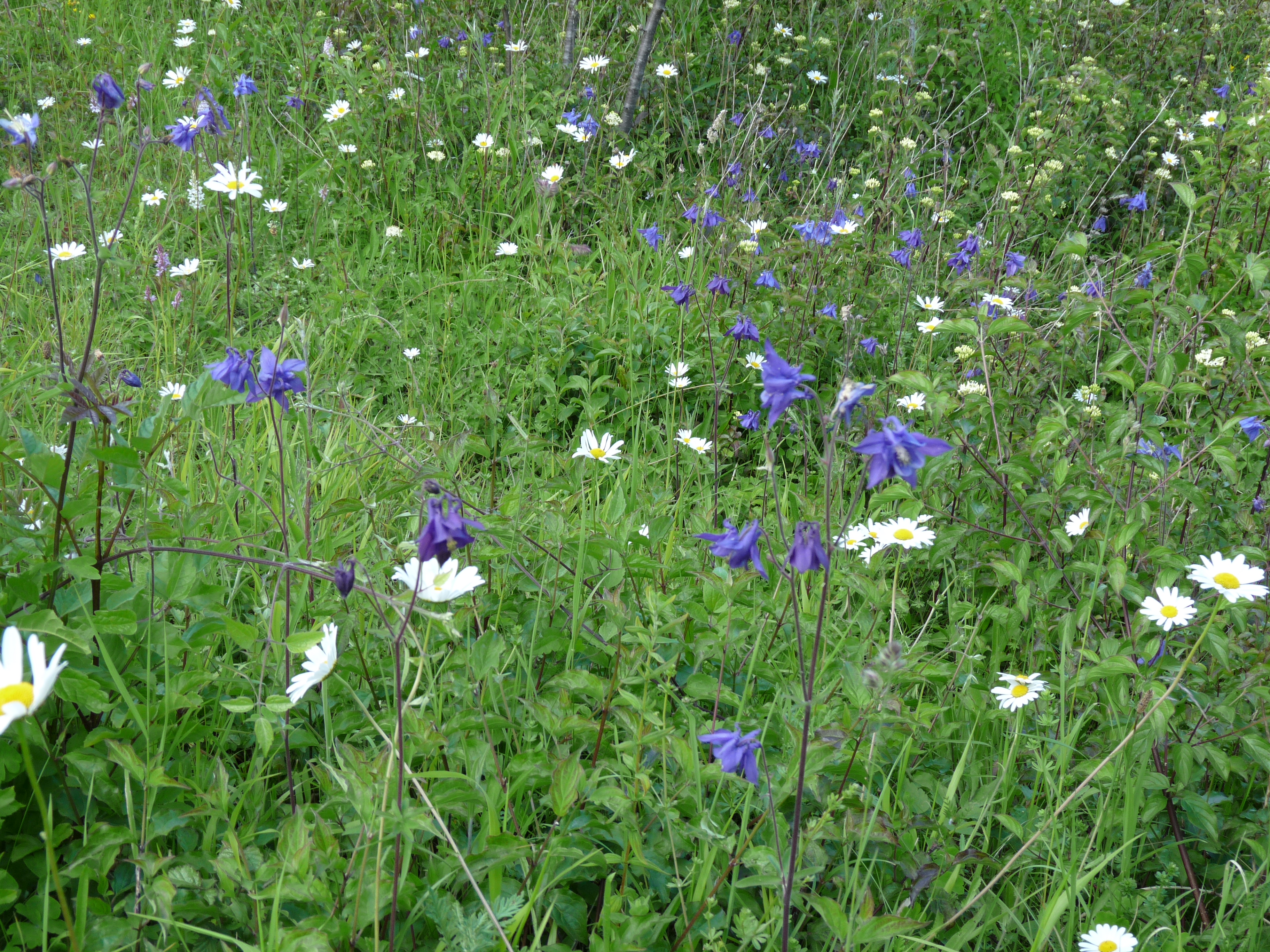
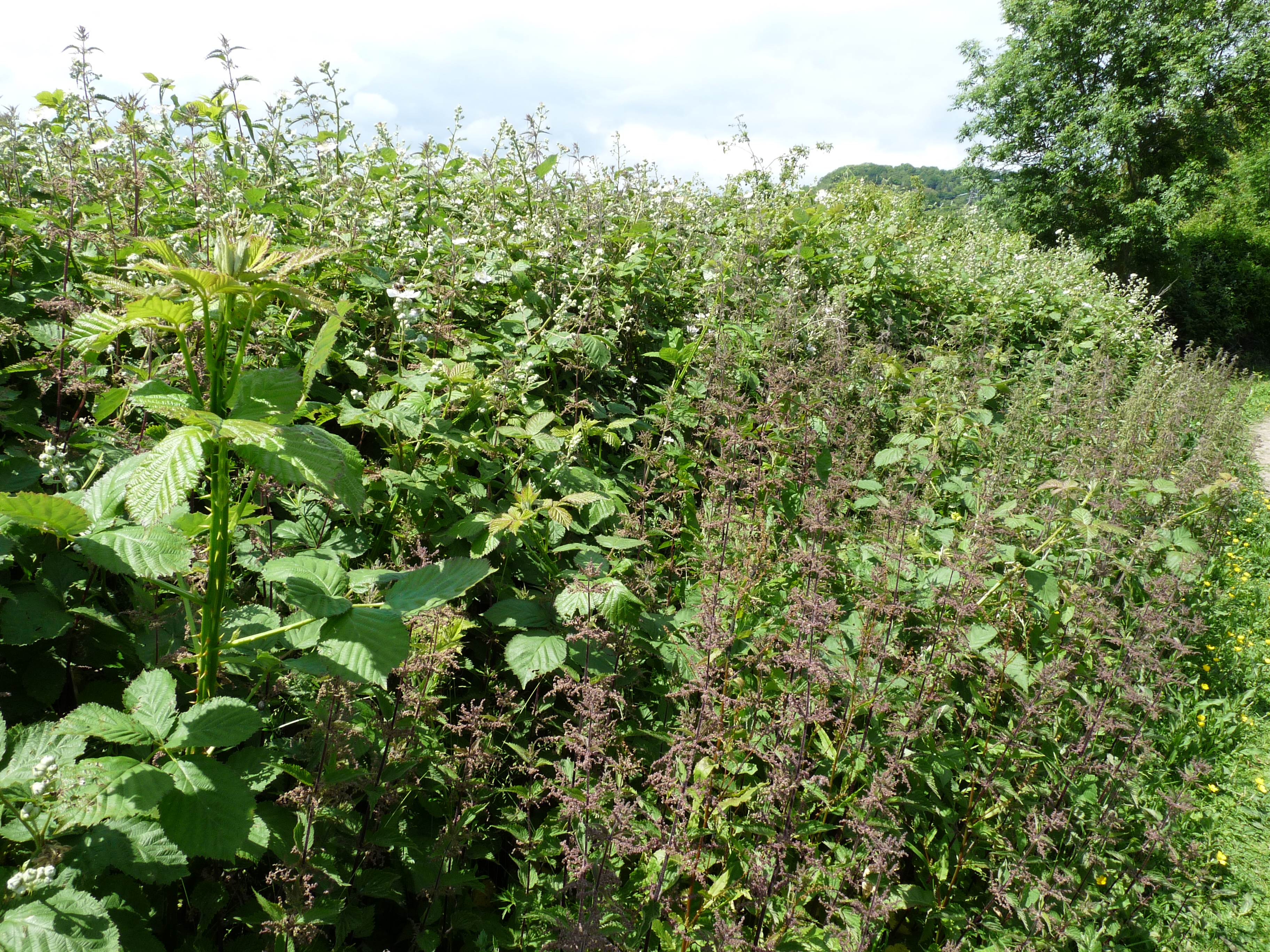
Or to see why this plant is called hop trefoil.This patch of columbines and oxeye daisies is tucked away in a shady corner.This is what the Roadside Nature Reserve would look like without all the hard work of Gill and her amazing team of volunteers.
Chalk grassland flowers are adapted to grow on dry chalky soil that doesn’t have much in the way of nutrients. When the much of the Downs used to be grazed by sheep, most of the nutrients from grass and other plants went into the sheep, rather than back into the ground, and the orchids and other chalk grassland flowers did well, whilst plants that need a lot of nutrients couldn’t grow very fast. Shrubs and trees got nibbled before they could grow very big, and much of the Downs remained as open grassland.
Although road verges are cut back by highways maintenance to maintain visibility, the usual way to manage them is to mow a short distance from the road from time to time, leaving the cuttings to mulch down in situ, which, in effect, adds a nice composty layer and enriches the soil. Great for nettles and other fast growing plants, which then smother the growth of the more delicate chalk grassland flowers.
Gill and the RNR volunteer team cut the vegetation on the Bluebell Hill verges by hand, across the whole of the site and rake up all the cuttings. It’s very labour intensive, as is counting the thousands of orchid spikes that are the result of this dedicated work!
This is just one of the many Roadside Nature Reserves in Kent, looked after by Gill, Zoe and a dedicated team of volunteers and honorary wardens.
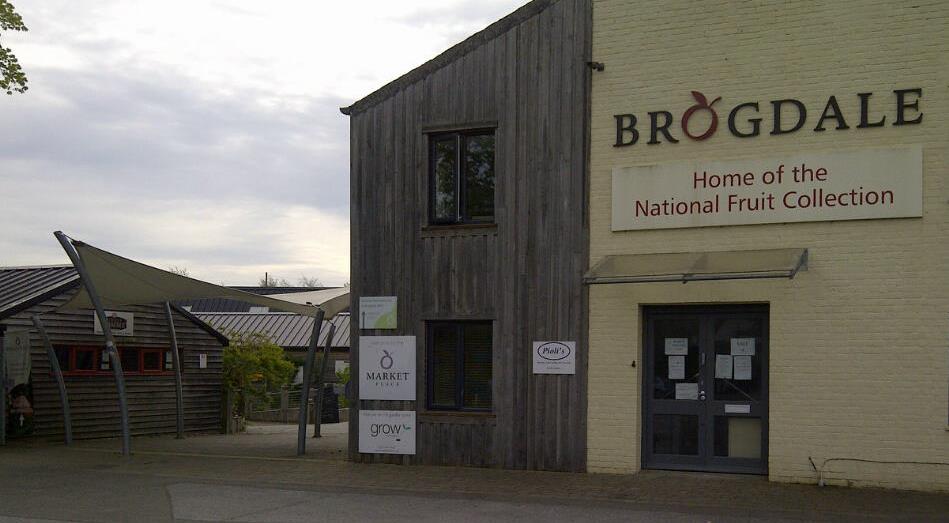
Brogdale Farm is the home of the national fruit collection, which includes over 3,500 varieties of fruit trees, shrubs and vines, and is part of an international programme to protect plant genetic resources for the future. It also hosts the Kent and Medway Biological Record Centre and a very nice café.
I’ve had meetings in a couple more interesting places this month – a few weeks ago I went to Brogdale Farm with Paul, our new Biodiversity Information Officer, who joined the team at the end of April. (Yes, it’s going to be confusing, two Pauls in the team, and neither of them own up to a nickname.) Paul’s job is to develop a more systematic way of surveying and recording how wildlife is doing, on our reserves and in the wider landscape. We want to demonstrate that not only are habitats being created restored and enhanced, but that this is increasing the success of species.
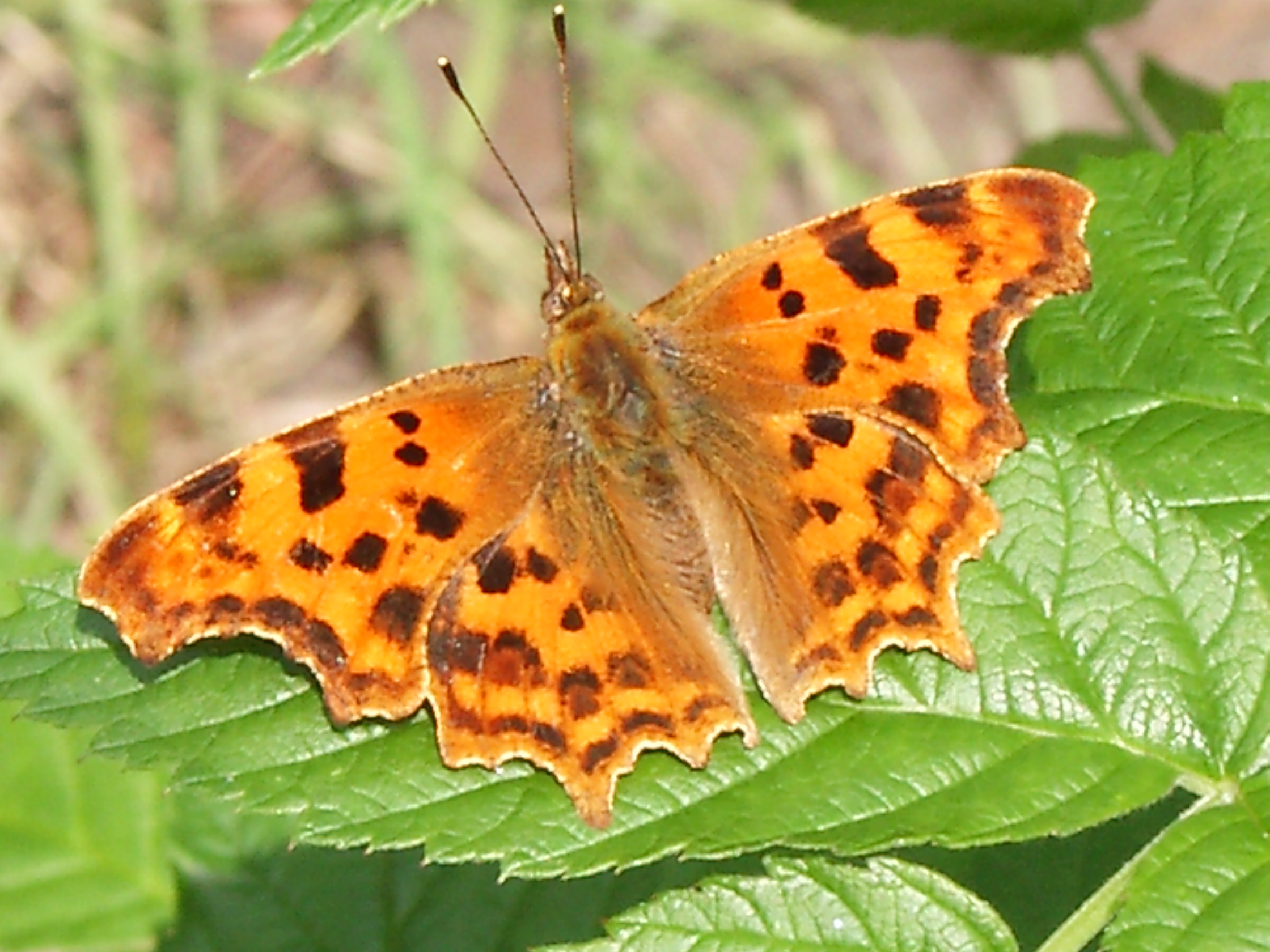
Comma Butterfly
There is already a huge amount of information being collected about wildlife by Trust staff and volunteers, who record the wildlife they see on our reserves (including Roadside Nature Reserves), carry out regular surveys of particular groups of wildlife such as butterflies, birds and reptiles, survey the rare habitats and species on Local Wildlife Sites, and, through our Shore Search and Sea Search activity, record marine wildlife. The challenge is to make sure that similar things are being surveyed in a similar way, so that we can compare results between different places, habitats and years.
One of the things that we will need to do is to come up with a way of storing all the data. At the moment there is a mixture of ways being used, but having a single system will make it easier to analyse it. (Or even to find it in the first place; much of my amphibian survey data is still stored in a box under the desk, on slightly muddy and previously damp bits of paper that I will put in a spreadsheet as soon as I have a moment…) There is already an organisation that stores biodiversity information for Kent, and we don’t want to duplicate what they are doing, so that is why we were at Brogdale farm, visiting the Kent and Medway Biological Record Centre, and discussing the best way to work together, as well as getting some very helpful advice.
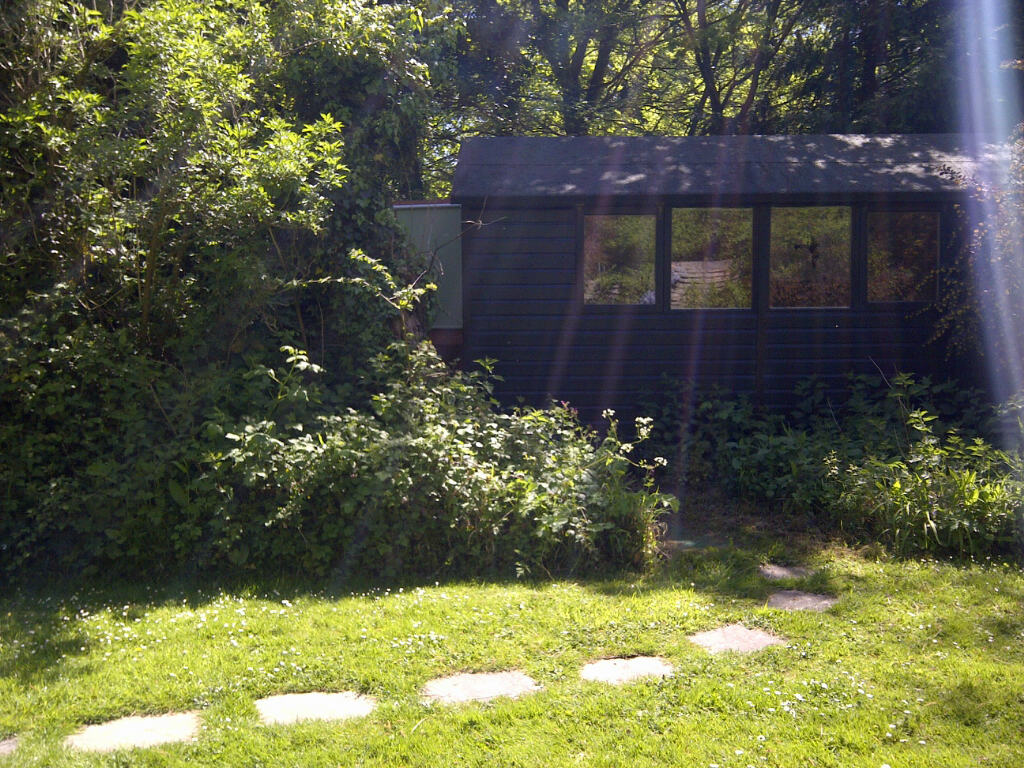
My next quirky meeting venue was a shed, at the Sussex Wildlife Trust offices at Woods Mill. Known as the Board Room, it provides additional meeting space, and no doubt useful storage space, as the need arises. I was there to meet Peter Anderton, one of the Sussex Wildlife Trust volunteers, along with Ian, the Conservation Manager. Peter is a geological engineer who has a long experience within the petrochemical industry and had offered to untangle the facts from the hype that surrounds fracking.
Everyone needs a shed!
We have a number of policies and position statements, setting out Kent Wildlife Trust views on certain contentious issues, which are approved by our Trustees and reviewed regularly. I have been updating our position statement on Badgers and Bovine Tb, and the one on Offshore Wind Farms, and next on the list is the one on fracking. It is important to make sure that the Trust’s position is based on scientific evidence about the impacts of any process on wildlife, so I read various research papers to try to form a balanced and evidenced based view, which is then reviewed by our Conservation Committee. However, the technicalities of hydraulic fracturing are way outside my experience! Sussex Wildlife Trust had kindly invited me to meet their volunteer who could explain the principles of hydrocarbon extraction in layman’s terms. It was incredibly interesting, and once I’ve finished reading up on some other aspects the existing policy will be updated and submitted to our Trustees for approval.
Have you been for a bluebell walk over the past few weeks? Last weekend I went to some woodland near Patching, in Sussex, on the recommendation of a friend, and was rewarded by a view of bluebells cascading down the rolling hillside like a waterfall. Sadly, my photographic skills didn’t do it justice, but we have no shortage of bluebell woods in Kent, and here is just one of the many images we have of these.
Many of Kent’s bluebell woods are Local Wildlife Sites, and as much of the work of the Conservation team contributes to protecting and improving these sites, I thought it would be timely to write about it.
Only a small proportion of land in Kent is protected by law for the nature that it supports. I wonder how many people know that there are another 450 sites across Kent that hold most of the rarest and most threatened species and habitats outside of the legally protected sites. These are the Local Wildlife Sites, there is probably at least one near you. They might be ancient woodlands, flower filled meadows, old orchards, grazing marsh, chalky grassland or even churchyards. Most are privately owned, although some may be council owned green spaces, and they are found right across Kent, even in the heart of our biggest towns.
Many were identified in 1986, when it was recognised that the Sites of Special Scientific Interest and European protected sites held only some of the county’s important habitats. If we wanted to look after the rest of it we needed to know where it was, and let others know, so that it could be protected and managed wherever possible. Since then, Kent Wildlife Trust has been coordinating the Local Wildlife Site system. The system has evolved over time, following government guidance, and there is now a rigorous process for identifying and designating the sites. This is important, because although there are no laws protecting the sites, national planning policy sets out guidance for the conservation and enhancement of biodiversity, including Local Wildlife Sites. In order for us to be able to argue for their protection in the planning process, we need to be able to demonstrate exactly why they are important for wildlife and that there is a fair process for their identification and designation.
Alison is in charge of this work, which starts with a request to the landowner for permission to carry out a survey to assess the wildlife value of the site. Sites have to have particularly rare or threatened habitats, or significant numbers of rare and declining species, in order to qualify as Local Wildlife Sites. Existing sites are checked, ideally every 10 years (depending on funding availability) to make sure they still meet the criteria. Over the past few weeks we have completed the review of these criteria, which are now undergoing consultation. We have a small team of experts who survey sites for us, then Alison, assisted by her volunteer trainee, Hannah, checks the results and prepares a map of the site and writes the descriptive citation.
There is an extensive consultation process for new and updated sites and, all being well, the site is eventually approved by the board of the Kent Nature Partnership. It doesn’t stop there though, Alison has to make sure that all the planning departments of local councils have information about the Local Wildlife Sites in their areas, which is provided in GIS (Geographic Information System) format. Alison is our GIS whizz, and tackles all the complicated, techie bits. For people like me, who have yet to get to grips with it, this is the best description of what GIS is that I’ve come across: What is GIS?
Bluebell woods are an iconic part of the Kent landscape. Bluebells are strongly associated with ancient woodland (technically referred to as ancient semi-natural woodland, as nothing in our crowded country is really free from man’s influence), so much so that they are used as one of the suite of species whose presence indicates that a woodland has been in place for over 400 years. Many large areas of ancient woodland in Kent are designated as Local Wildlife Sites, and we work hard to ensure that bluebell walks in May will be available for future generations.
We do a lot of work to try to ensure that these wonderful sites keep their wildlife, and to encourage their enhancement and many Local Wildlife Site owners work very hard to manage the sites so that they support the best wildlife possible. Richard Neame made a generous endowment to provide an award to recognise the efforts of those people managing the sites and the contribution they make to saving and improving Kent’s threatened wildlife. On Friday, our Chairman, Mike Bax, presented the Richard Neame Gold Award to the Bredhurst Woods Action Group, who have been looking after Bredhurst woods for 10 years, and achieved some amazing results. Neil, our senior land management adviser, has been working with the Group for several years, providing advice and support to help the group enhance woodland and chalk grassland habitats and it was nice to hear him mentioned several times during the evening. It has clearly been a very effective collaboration.
Mike Bax, Chairman of Kent Wildlife Trust, presents the Richard Neame Gold Award to the Bredhurst Woods Action Group for their outstanding management of a Local Wildlife Site.
Staff at Kent Wildlife Trust demonstrate that they are always willing to eat cake for a worthy cause.
Yesterday I held an afternoon cream tea break to raise money for a friend who was running the London Marathon for Whizz-Kidz. We have a few expert bakers in the team so scones and clotted cream were kindly supplemented by Camilla (patisserie champion), Paul (king of the intriguingly-decorated chocolate cake) and Alison (provider of the healthy option, because lemon drizzle is one of your five-a-day). Diets were busted, generous donations made, and we all admired the achievement of my friend from the comfort of the staff room chairs.
It’s all about meeting people… In the interests of entertaining you, I will focus on the interesting bits of my work, but will need to shamelessly plunder other people’s activity to write about. Because, it has to be said, that a large part of my time is spent in meetings. That’s not really surprising, as the role of the Conservation Team is to influence what people do, and so I spend a lot of time meeting people and discussing how we can work together to improve Kent’s environment, and then more time in meetings with my colleagues (who are doing all the hard work) discussing how to deliver the work, and yet more time in meetings discussing how all this work might be funded.
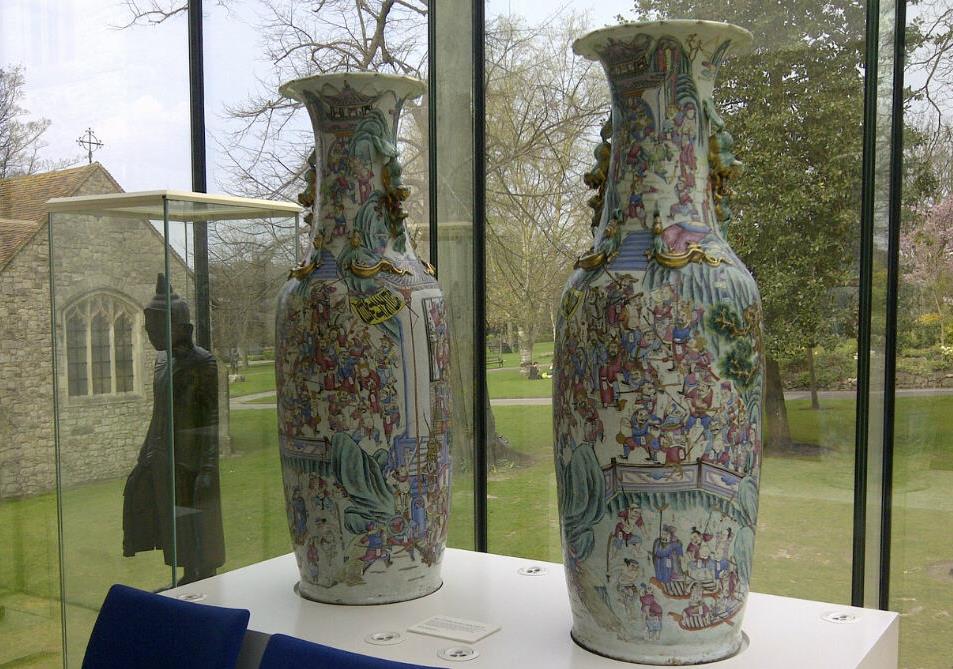
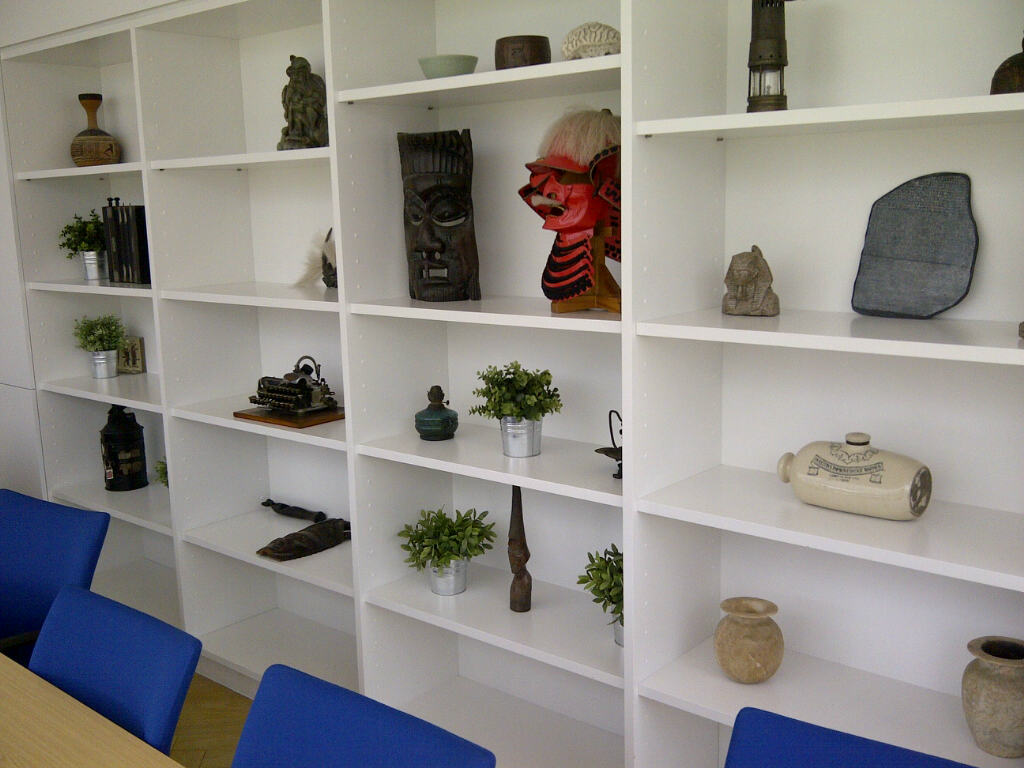
One of the things I like about my job is the many and varied places in which meetings are held. I get to see buildings and behind-the-scenes in places that I would never otherwise have access to. Last week I attended a Kent Nature Partnership meeting, in the Glass Room at Maidstone Museum. The room has a display of fascinating objects, although it appeared that the tarantula might have proved too distracting to a recent meeting participant, as it had been discretely tucked away behind a plastic plant.
Display in the Glass Meeting Room at Maidstone Museum. Spot where someone has tried to hide the tarantula.
…and finding funding In recent months, a lot of my time has been devoted to trying to secure funding. It takes a lot of money to look after Kent’s wildlife – not just the resources we need to improve wildlife habitat and create more of it, but to pay the skilled staff who run the projects, provide advice to landowners, or make the case for protecting sites and species to those in a position to affect this. The generous support of our members goes a long way to providing this, but the task we face, to stop biodiversity declining and start to recover, is a huge and expensive one.
Several members of the team are working on funding bids to enable us to create networks of wildlife habitat along rivers, to restore wildflower meadows, to involve people in looking after and enjoying our amazing marine wildlife, and to improve the natural and cultural heritage on the Romney Marshes. An advantage of working in Kent is that we are able to work easily with partners on the other side of the Channel, and to seek funding from the European Regional Development Fund. Landscapes and habitats in northern France are similar to those in Kent, and it is very useful to share information on their conservation.
Last week, a group of Kent Wildlife Trust staff set off in the Trust landrover for a meeting in France to discuss a new project. Not being a morning person, I found the 4.45 start a bit of a challenge, but by 9.00 local time we were in Calais, to meet staff from some of the Conservatoires D’Espaces Naturels in northern France. These are very similar to Wildlife Trusts, managing nature reserves and seeking to protect and enhance biodiversity in France. We are lucky to have Camilla in the conservation team, as well as a multi-talented project officer, she is also a fluent French speaker, having grown up in France. She had the incredibly difficult task of translating everything that was discussed either into French or English, which requires a huge amount of concentration. She did a great job, because by the end of the day we had agreed the outline of the project and we hope to be submitting something to the funder soon.
Kent Wildlife Trust staff write letters in support of the designation of Marine Conservation Zones.
Last week, we held a letter writing coffee break, encouraging staff who wanted to write in response to the government consultation on whether more marine areas should be protected from damage. Fuelled by cake kindly brought in by Bryony and Fiona (the marine officers) and inspired by the talk that Bryony gave, showing us the amazing wildlife hidden under the waves, we wrote to Defra, explaining why we thought the government should designate three areas around Kent as Marine Conservation Zones.
This is such an important time for marine conservation – we take it for granted that there are areas on land that are protected from damage, we have nature reserves, national parks, Sites of Special Scientific Interest and Local Wildlife Sites for example, containing much of our most treasured wildlife and landscapes. But very little of the seascape is protected, and it is vulnerable to all sorts of potentially damaging activities. Sadly, because we can’t see the beautiful landscapes and habitats under the sea, we don’t even know this is happening.
Now we have a chance to change this. New legislation, The Marine Act, passed in 2009, requires the government to designate a network of Marine Conservation Zones. £8 million of public money was spent on a wide-ranging and fair consultation of all sea user groups, who finally agreed on 127 sites, which would have protected good examples of each kind of marine habitat (just as on land, habitats on the sea bed are incredibly varied) and formed an ecological network, allowing species to move between protected sites. Since then, only 27 have actually been designated, and another 23 are being consulted on now. Governments are driven by public opinion, so we need as many people as possible to write in to the consultation and say that they think it is important to protect marine wildlife for the future – for its own sake, for the health of our seas and the economic future of the fishing industry.
For people who are not marine experts (this includes me, and 98% of the staff at Kent Wildlife Trust) writing on the subject can be daunting, which is why we organised a letter writing coffee morning. With Bryony and Fiona on hand to answer questions and provide descriptions of each proposed Marine Conservation Zone, we all felt more confident to put our thoughts on paper. Although you don’t have access to Bryony and Fiona, they have provided this information on our website, and there is a page on The Wildlife Trusts national website to give you tips on writing a response to the consultation. So please, write today. Every individual response counts for so much more than a signature on a campaign; it’s a chance in a lifetime to get marine wildlife protected!
Spring has officially sprung, on the day of a much hyped but largely concealed eclipse. The days are getting longer, and if the weather doesn’t seem to know that it should be getting warmer, that hasn’t stopped the wildlife from getting ready for the great burst of life that this time of year heralds.
Blackthorn in blossom
Sadly, my only contact with nature during the week is often just what I see from the car window. Even then, it’s great to see the white blossom start to appear along the motorway verges as the blackthorn springs into life. This month, however, I’ve come out of hibernation and managed to squeeze three site visits into the same week.
The first was out on the edge of town, to look at what is happening on a somewhat neglected site, and how it might be managed in the future. It certainly needs a bit of TLC – like many urban sites it has its share of fly-tipping and other problems – but it is a very good site for wildlife and has some interesting habitats which already support a lot of threatened species and have the potential to be even better. It could also be a great place to explore – but I suspect at the moment it is one of those places that people who live nearby don’t even know they could visit. The wildlife highlight of the day was seeing some gadwall flying by. They are not rare birds (although they are amber status, which means they are not doing too well) but you need to be out and about to see them – on lakes or gravel pits or coastal wetlands.
Lodge Hill
Having visited a site with an uncertain but positive future, the next day took me to a site under threat. Lodge Hill has even hit the national news, as it is (thankfully) unusual for a site that is so important for wildlife to be proposed for development. It’s a slightly convoluted story; for many years environmental experts (including Greg, a Conservation Officer at Kent Wildlife Trust) warned developers and the local council that Lodge Hill had a very high value natural environment, and that before they made any plans they needed to survey it properly and find out what was there, because that might affect their plans. Unfortunately, the actual value of the site in wildlife terms wasn’t fully assessed until after plans for up to 5000 houses were submitted.
Neutral grassland, an important habitat for wildlife, could soon disappear under thousands of houses at Lodge Hill
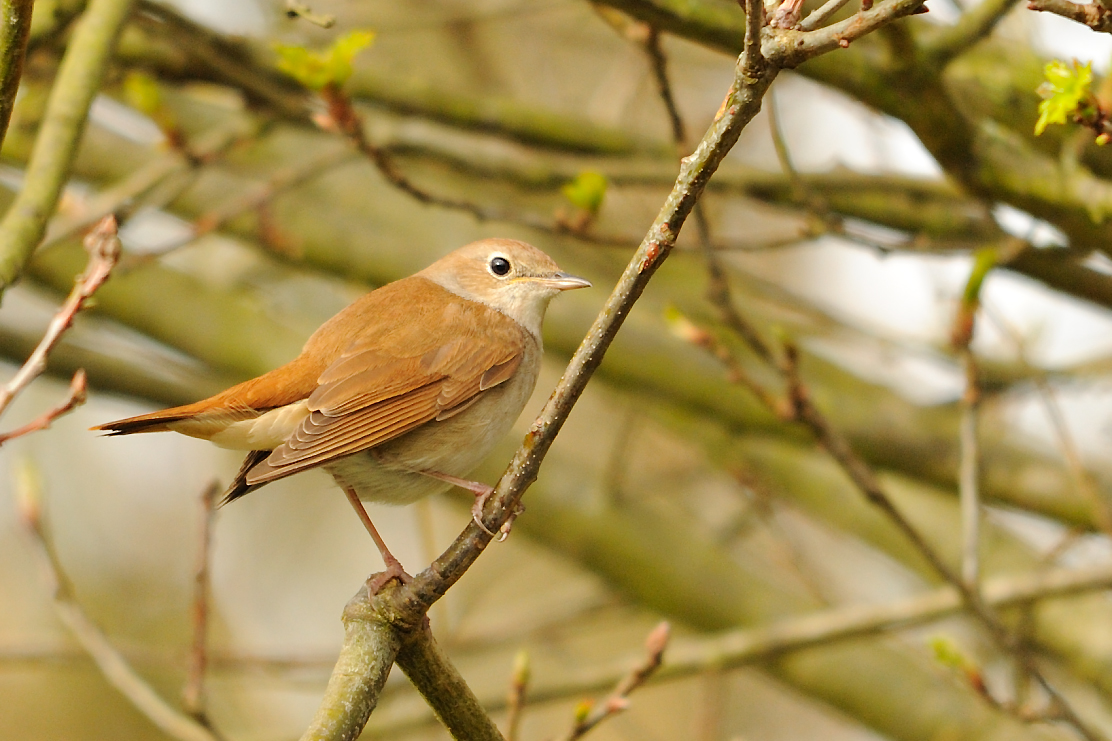
Lodge Hill, it was discovered, was the home of over 1% of the national nightingale population. Another amber list bird, they have been declining since the ‘60s, and this decline has been even worse in recent years – between 1995 and 2009 we lost over half of the remaining population. This means that Lodge Hill is important enough for it to be designated as a Site of Special Scientific Interest, and therefore protected from damage, unless there is an overriding public need. The Secretary of State has therefore questioned the council’s decision to allow it to be built on, and has asked for the decision to be examined through a Public Inquiry.
A decision on this will set a national precedent, so we will work with The Wildlife Trusts’ national office to make sure we make the best case for protecting the wildlife of this important site. Stephen Trotter, Director of The Wildlife Trusts in England, came to see the site, hear about the background and discuss how we can draw on national expertise.
Greg shows Stephen where the nightingale breeding sites will be lostLesser celandine
It was too early to see (or hear) any nightingales, which spend the winter in West Africa and don’t start to arrive until April, so my wildlife highlight for the day was seeing lesser celandines along the roadside, like little golden stars sprinkled liberally along the bottom of the hedgerows.
One Planet Living
In between visits, I have been preparing a workshop session for our staff day, on One Planet Living. This is the approach we want to take to making sure we are working in the best way possible for the health of the planet. We know we are getting the positive impacts right, but we also need to make sure that we limit and reduce any negative impacts. People had lots of ideas of how we could do this better, so we will be sharing this on our website soon.
Burham Down
A feature of our staff days is a visit to one of our reserves to see some of our work at first hand, which is especially interesting for those of us who are mainly office based. I confess to frequently bailing out on these, citing pressure of work, but it seemed crazy not to go for the hat-trick of three visits in one week, especially on such a glorious spring day.
Steve Weeks has been working for Kent Wildlife Trust for 15 years, managing a group of sites along the North Downs from Bluebell Hill down to the River Medway. He took us up a steep path from Burham village, into the woodland that covers most of the site. The woodland is fairly recent, grown up on the chalky grassland once it was no longer economical for farmers to graze sheep on it. If left to its own devices, most of this area would, in time, revert to woodland and in some places that would be a good thing.
The ancient woodland that once cloaked much of the South East only exists in fragments now, reconnecting these fragments would help some of the remaining woodland wildlife. But the grazing animals that used to inhabit the ancient woodland , keeping grassy clearings open and sunny glades open, no longer exist, and without them the woodland habitat is far less varied. A lot of conservation management is aimed at achieving the mosaic of habitats that nature once managed without our help. There is very little chalk grassland in the world – and a surprisingly large amount of it is found in South East England, on the North and South Downs. It is special because of the mixture of flowering plants and grass you find there, which in turn support lots of other wildlife, some of it found nowhere else. Some people call it the European equivalent to the rainforest because so many different species can be found in a single square metre. At Burham Down, Steve and his volunteers have cleared some of the scrub and trees from the chalk grassland areas, and already the chalk grassland plants are reappearing. We saw violets carpeting on the steep slopes, and the leaf whorls of orchids that will flower in May and June.
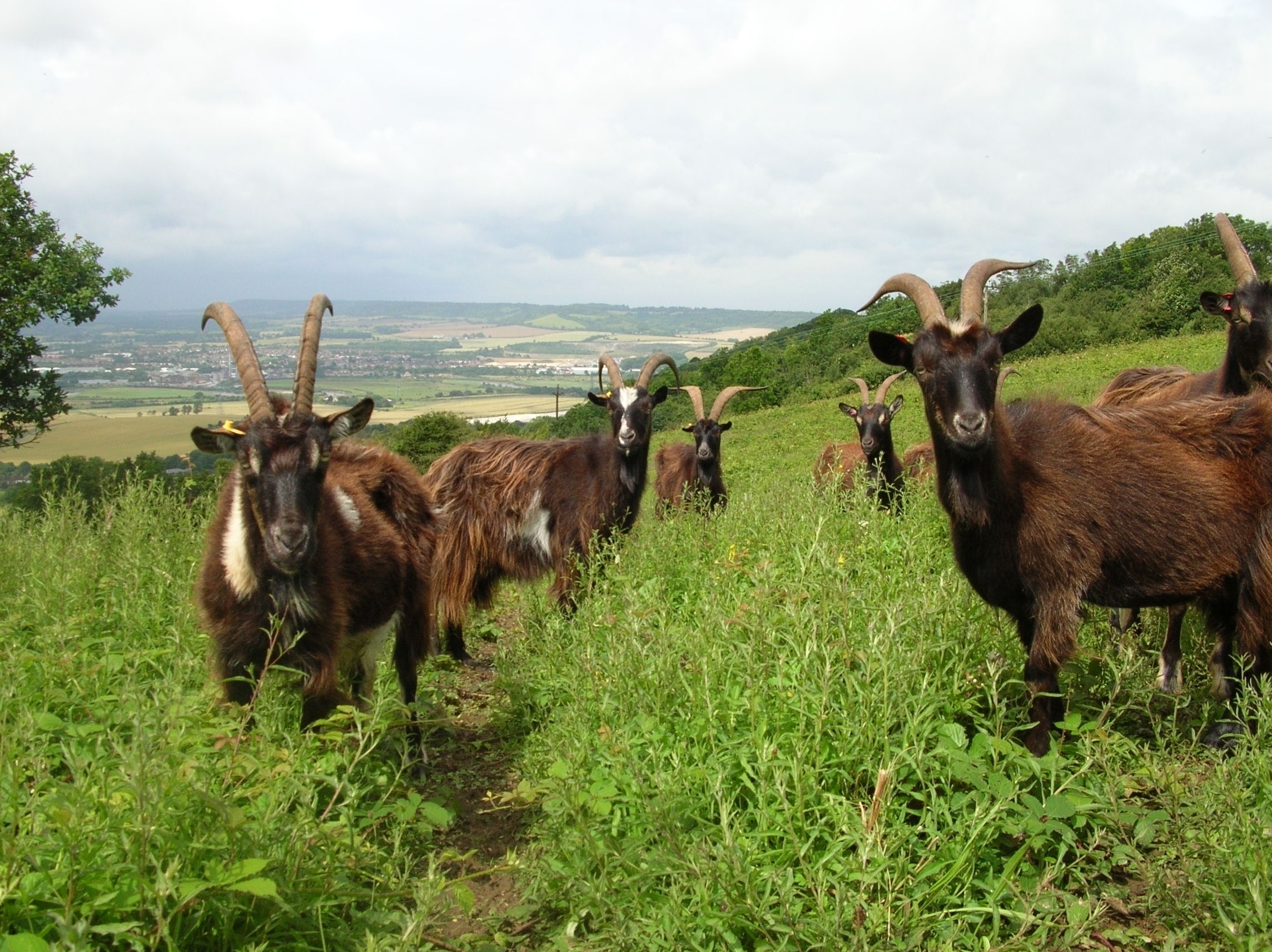
Sheep and goats are much better at keeping the scrub in check once it has been cut back than people, so Steve has a mixed flock grazing the cleared slopes. The woodland also gets managed – the aim is to create a varied mixture of habitats within the woodland, with open sunny patches, open woodland and densely vegetated woodland, to suit the needs of the many species found here. This includes nightingale, I’m determined to come back in a month or so and see if I can hear them.
Working as the Head of Conversation, Policy and Evidence at Kent Wildlife Trust is a dream job. I coordinate the work of an amazing team of people who are helping to make the world a better place, or at least this small Kentish corner of it. If you have arrived at this blog via the Kent Wildlife Trust website you will have seen some of the work that the Trust does, looking after nature reserves, running events, helping people find out more about wildlife and providing advice on how to protect our environment. But if you would like to find out what goes on behind the scenes, read on and I’ll introduce you to the people who work here, and follow them over the year as we strive to protect and increase Kent’s wildlife.
The opinions I express here are unreservedly my own, although I hope they would not contradict the aims and objectives of the Trust. (They’re sure to let me know if they do …)











 The only way is wildlife