


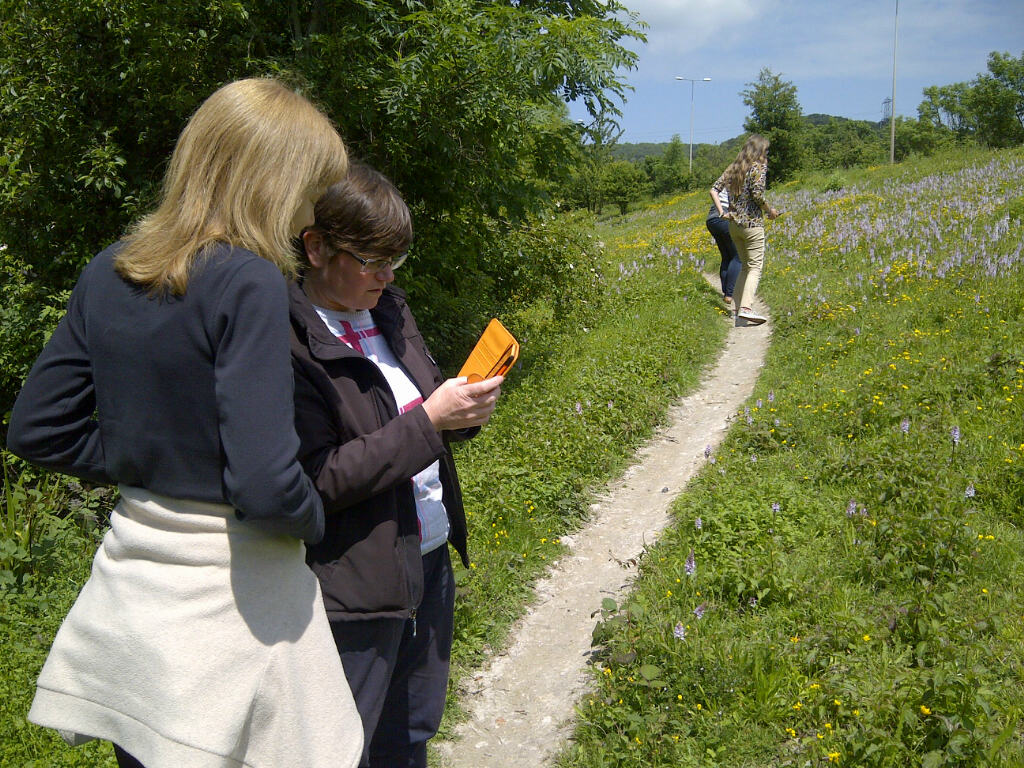
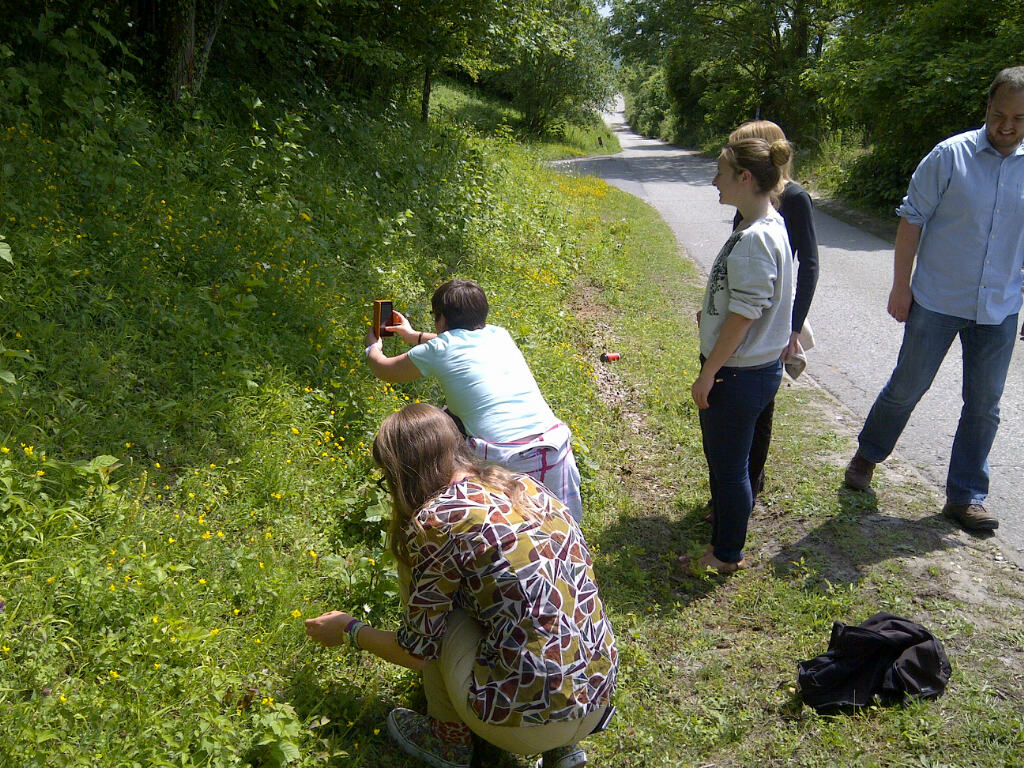
At the moment you can see the pink spikes of the common spotted orchids as you drive past. Last year, Gill’s volunteers counted 26,000 orchids on the Bluebell Hill Roadside Nature Reserve. As well as common spotted orchids, there are pyramidal orchids, man orchids, bee orchids, common twayblade, broad-leafed helleborine and white helleborine.
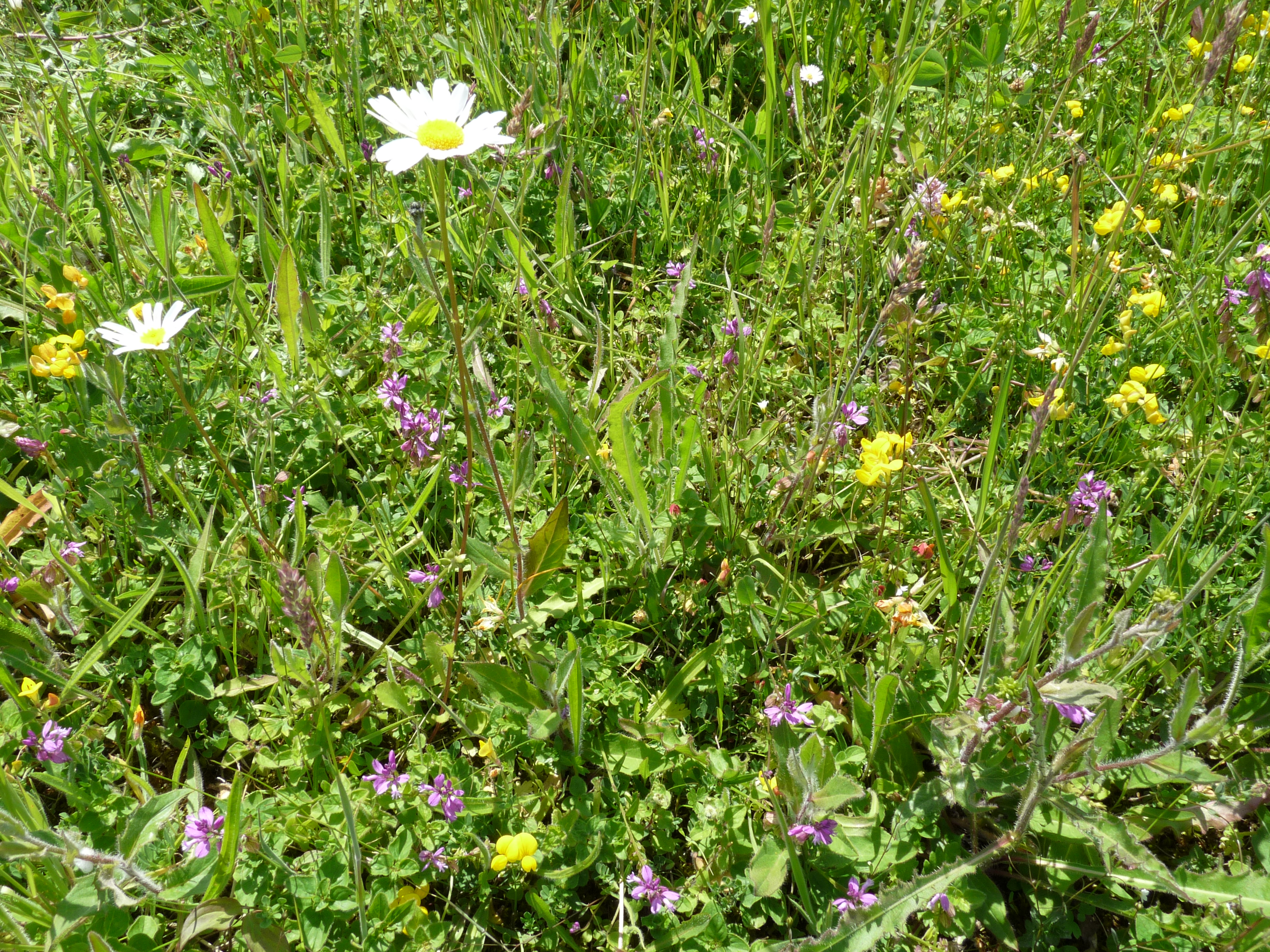
Not all chalk grassland flowers are as showy as the orchids, you have to look closely to appreciate the beauty of delicate fairy flax, eyebright and milkwort.

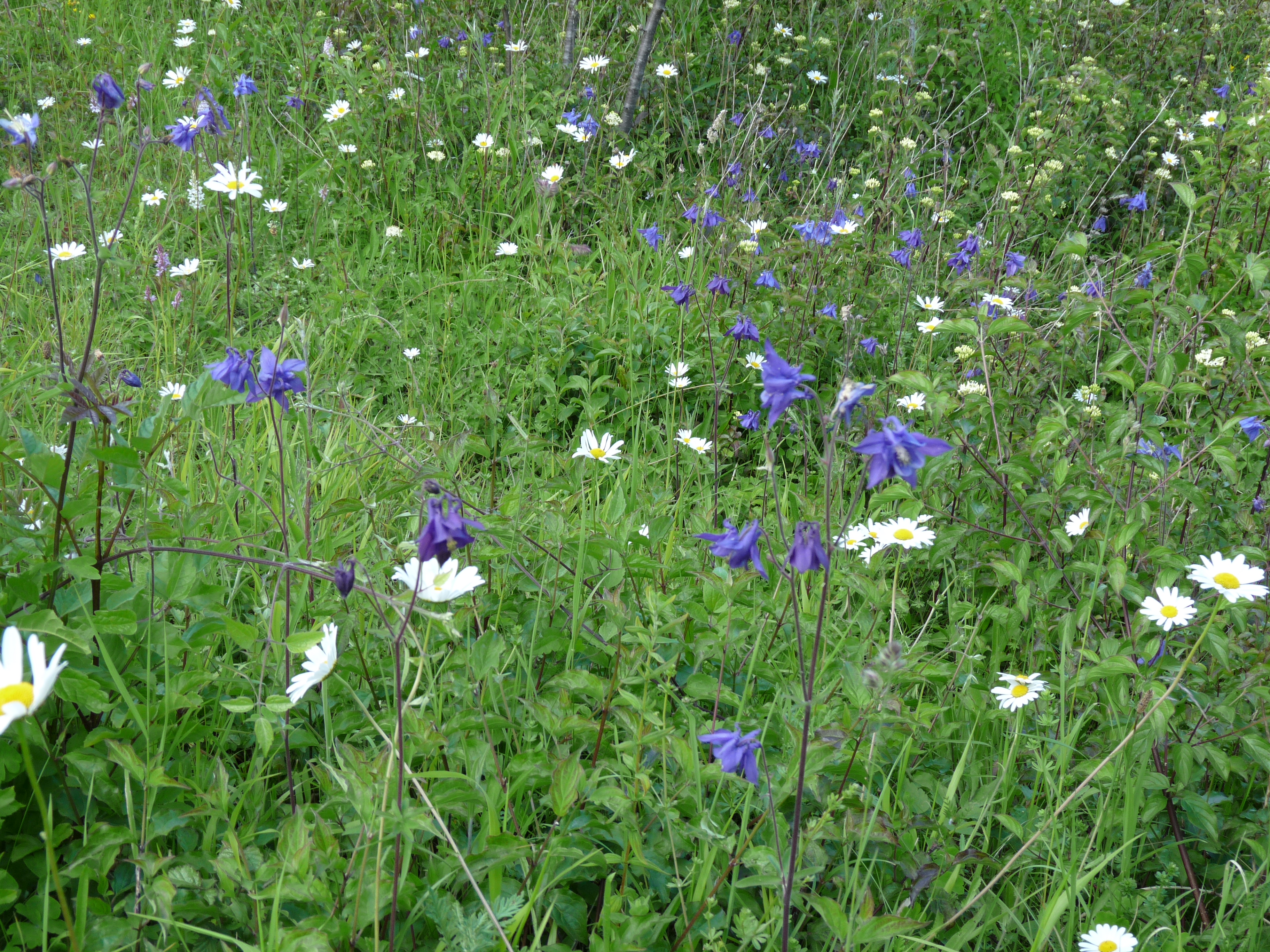
Chalk grassland flowers are adapted to grow on dry chalky soil that doesn’t have much in the way of nutrients. When the much of the Downs used to be grazed by sheep, most of the nutrients from grass and other plants went into the sheep, rather than back into the ground, and the orchids and other chalk grassland flowers did well, whilst plants that need a lot of nutrients couldn’t grow very fast. Shrubs and trees got nibbled before they could grow very big, and much of the Downs remained as open grassland.
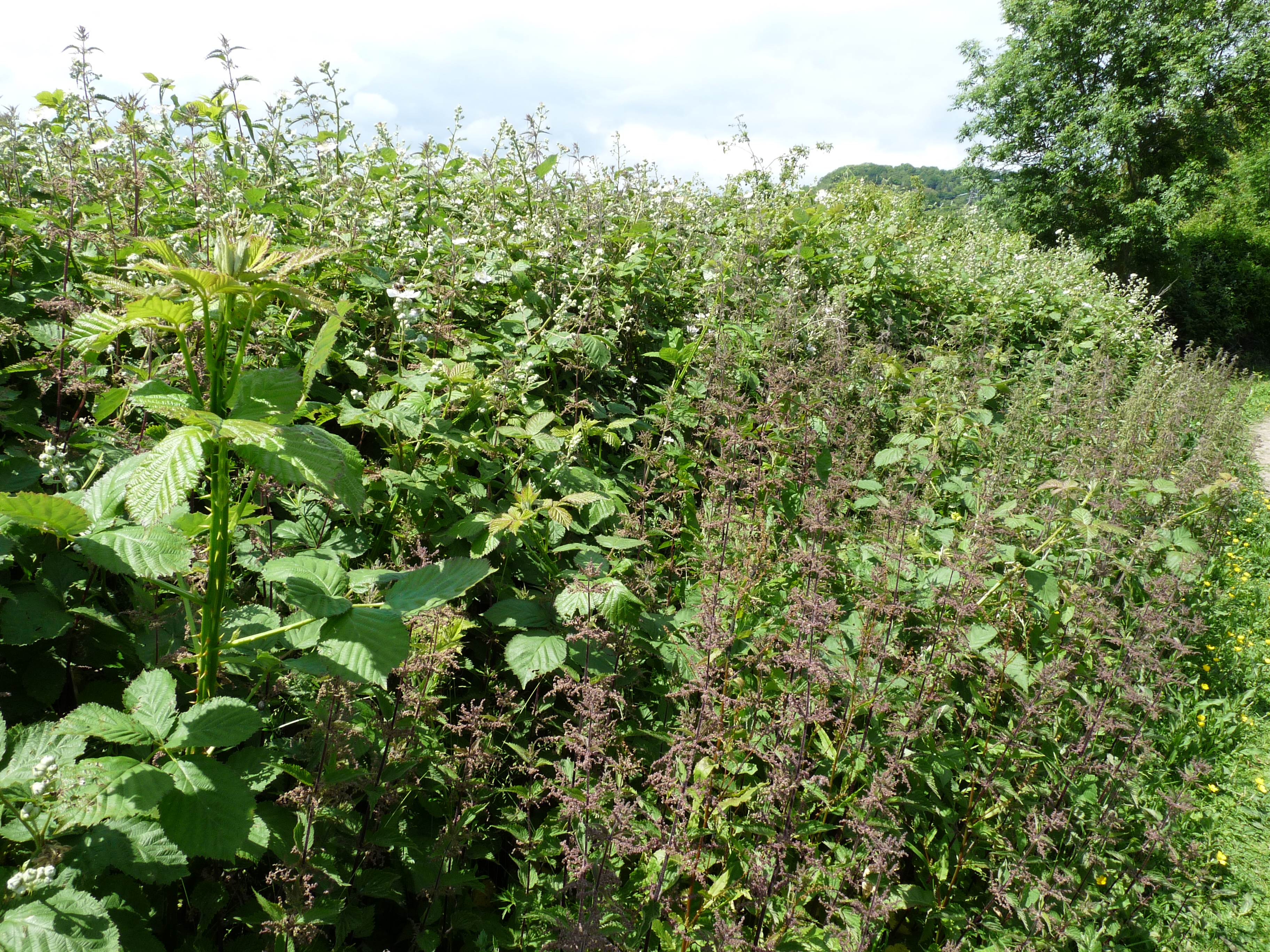
Although road verges are cut back by highways maintenance to maintain visibility, the usual way to manage them is to mow a short distance from the road from time to time, leaving the cuttings to mulch down in situ, which, in effect, adds a nice composty layer and enriches the soil. Great for nettles and other fast growing plants, which then smother the growth of the more delicate chalk grassland flowers.
Gill and the RNR volunteer team cut the vegetation on the Bluebell Hill verges by hand, across the whole of the site and rake up all the cuttings. It’s very labour intensive, as is counting the thousands of orchid spikes that are the result of this dedicated work!
This is just one of the many Roadside Nature Reserves in Kent, looked after by Gill, Zoe and a dedicated team of volunteers and honorary wardens.
 The only way is wildlife