Spring survey

Bluebells at Thornden wood in the Blean

I really should have known better – I had managed to plan a visit to Blean woods during the first hot and sunny week of the year, and was looking forward to a gentle wander through the woodland, dappled sunlight playing across carpets of spring flowers. How I actually spent the morning was scrambling through bushes, old bracken and bramble and falling down the occasional hole. Still thoroughly enjoyed it though!
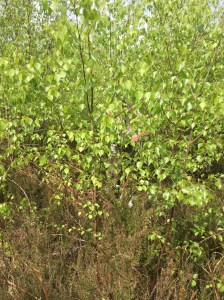
Surveying dense scrub regrowth at Blean Woods
Can’t see the surveyors for the trees – Paul and Pica are in there somewhere. In a couple of years this will be even denser – perfect for nesting nightingales.

Paul had allowed me to gate crash one of his surveys, which turned out to be in an area of conifer plantation that was being restored to native woodland. Of course the thing about woodland restoration is that it takes time, and three years in, the area was thick with small birch trees, last year’s bracken and bramble, all growing fast now that the deep shade from the conifer trees has gone. It will be a while before the tree canopy lifts and the plants at ground level become more varied, but we found a fair bit of heather, which is an important part of the mixture of plants we hope to eventually see in this part of the woodland.

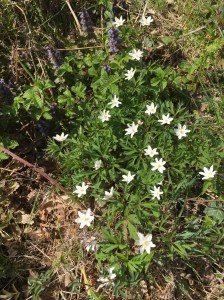
Thornden Woods in springArriving late, I had missed the chance for a lift from the car park to the section of Thornden Wood that Paul and his ecology group volunteers were heading for. Luckily, that meant a chance to walk along the track, flanked on either side with trees just erupting into that vibrant but ephemeral spring green. There were plenty of flowers along the woodland edge to satisfy my desire for spring colour; bluebells, wood anemones, bugle and the occasional lime green of a patch of wood spurge, almost fluorescent in the sunlight.
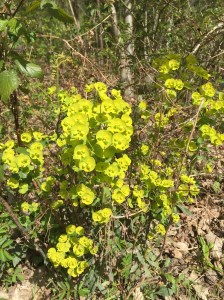
Wood spurge, Euphorbia amygdaloides
Wood spurge
Wood anemone, bugle and bluebell

After a lovely walk down the track, resisting the temptation to explore the Wild Art trail, I found Paul and Mark (the Canterbury Area Warden) with Alex and Paul, two ecology group volunteers, forging through the undergrowth in pursuit of science.

Mark is experimenting with different management techniques, to see which is most effective in restoring the woodland. In the three areas we were surveying, one had been clear-felled (all the conifers removed)  and left to regenerate, another had also been clear-felled  and was being grazed from time to time. In the third, some conifers had been taken out to thin the canopy and let more light in. At this stage, there was a relatively small variety of species to be found, but it can still be quite tricky to identify young plants that are not in flower – fortunately Alex is an experienced botanist and able to help with any unfamiliar species. I can’t report any unusual species in the bits we surveyed, but the presence of native birch, willow, oak and hornbeam shows that the restoration to native woodland is clearly underway.

————–

Edited 10th June 2016 because I got Paul’s name wrong. Unforgivable, because as well as being an ecology group volunteer he is a regular volunteer at Blean Woods and highly appreciated by the wardens. So sorry, Paul.
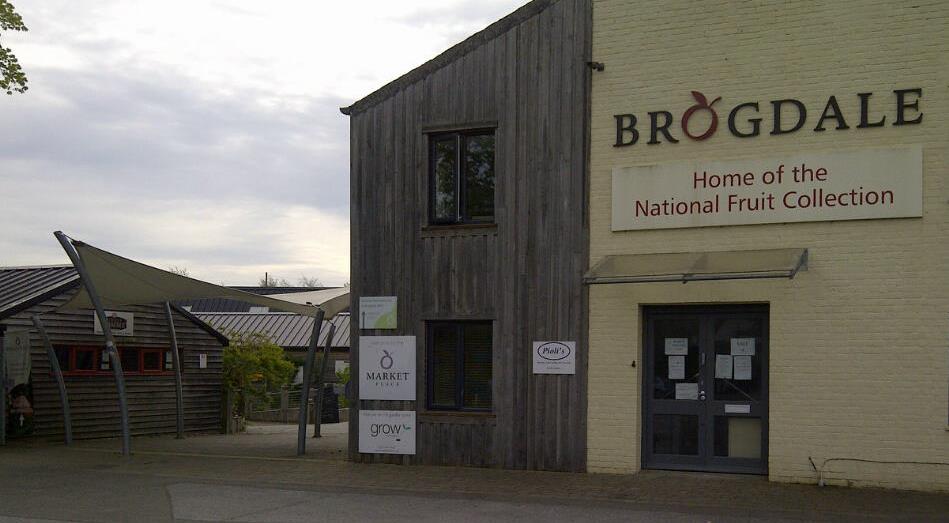
Brogdale Farm
Brogdale Farm is the home of the national fruit collection, which includes over 3,500 varieties of fruit trees, shrubs and vines, and is part of an international programme to protect plant genetic resources for the future. It also hosts the Kent and Medway Biological Record Centre and a very nice café.

I’ve had meetings in a couple more interesting places this month – a few weeks ago I went to Brogdale Farm with Paul, our new Biodiversity Information Officer, who joined the team at the end of April. (Yes, it’s going to be confusing, two Pauls in the team, and neither of them own up to a nickname.) Paul’s job is to develop a more systematic way of surveying and recording how wildlife is doing, on our reserves and in the wider landscape. We want to demonstrate that not only are habitats being created restored and enhanced, but that this is increasing the success of species.

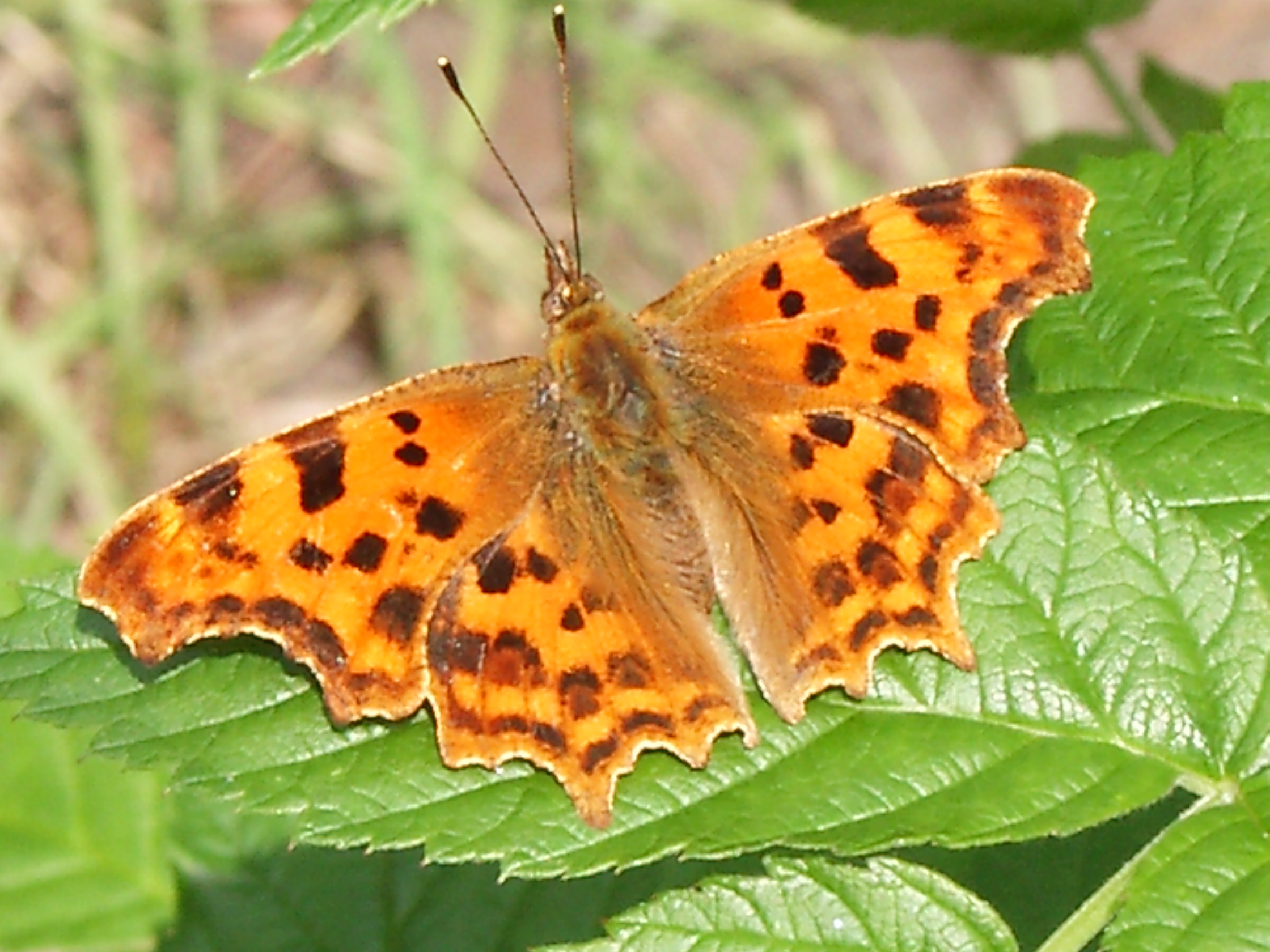
Comma Butterfly
Comma Butterfly

There is already a huge amount of information being collected about wildlife by Trust staff and volunteers, who record the wildlife they see on our reserves (including Roadside Nature Reserves), carry out regular surveys of particular groups of wildlife such as butterflies, birds and reptiles, survey the rare habitats and species on Local Wildlife Sites, and, through our Shore Search and Sea Search activity, record marine wildlife. The challenge is to make sure that similar things are being surveyed in a similar way, so that we can compare results between different places, habitats and years.

One of the things that we will need to do is to come up with a way of storing all the data. At the moment there is a mixture of ways being used, but having a single system will make it easier to analyse it. (Or even to find it in the first place; much of my amphibian survey data is still stored in a box under the desk, on slightly muddy and previously damp bits of paper that I will put in a spreadsheet as soon as I have a moment…) There is already an organisation that stores biodiversity information for Kent, and we don’t want to duplicate what they are doing, so that is why we were at Brogdale farm, visiting the Kent and Medway Biological Record Centre, and discussing the best way to work together, as well as getting some very helpful advice.

My next quirky meeting venue was a shed, at the Sussex Wildlife Trust offices at Woods Mill. Known as the Board Room, it provides additional meeting space, and no doubt useful storage space, as the need arises. I was there to meet Peter Anderton, one of the Sussex Wildlife Trust volunteers, along with Ian, the Conservation Manager. Peter is a geological engineer who has a long experience within the petrochemical industry and had offered to untangle the facts from the hype that surrounds fracking.


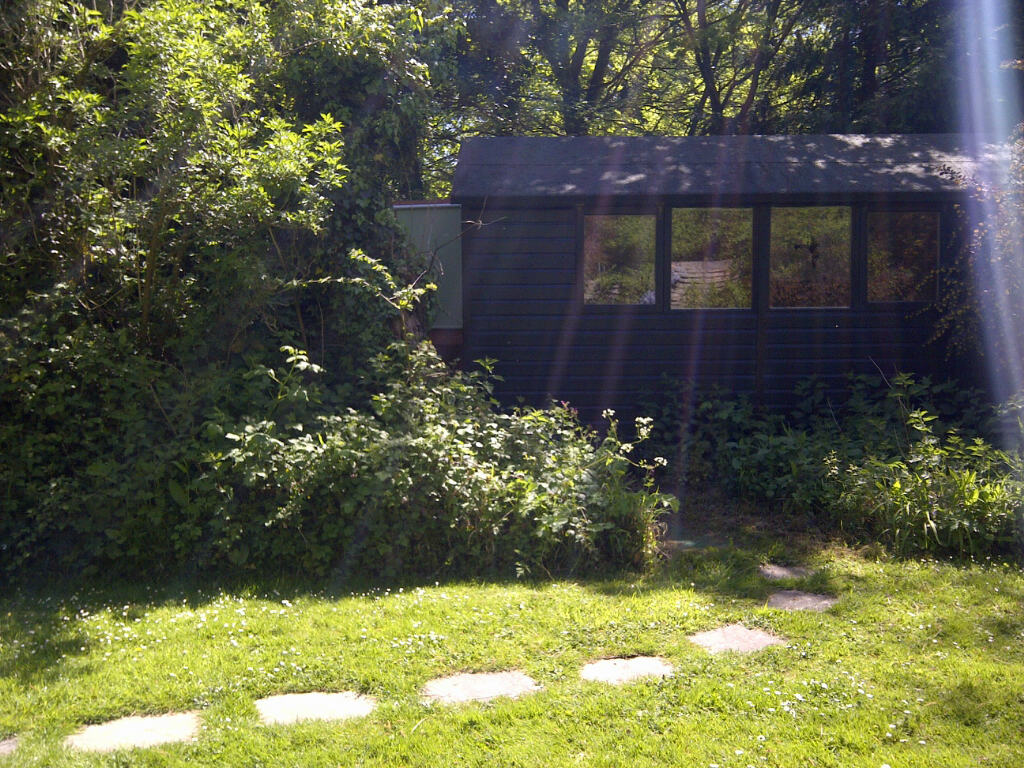
Shed at Sussex Wildlife Trust
Everyone needs a shed!

We have a number of policies and position statements, setting out Kent Wildlife Trust views on certain contentious issues, which are approved by our Trustees and reviewed regularly. I have been updating our position statement on Badgers and Bovine Tb, and the one on Offshore Wind Farms, and next on the list is the one on fracking. It is important to make sure that the Trust’s position is based on scientific evidence about the impacts of any process on wildlife, so I read various research papers to try to form a balanced and evidenced based view, which is then reviewed by our Conservation Committee. However, the technicalities of hydraulic fracturing are way outside my experience! Sussex Wildlife Trust had kindly invited me to meet their volunteer who could explain the principles of hydrocarbon extraction in layman’s terms. It was incredibly interesting, and once I’ve finished reading up on some other aspects the existing policy will be updated and submitted to our Trustees for approval.